Why Two Devices Show Different Versions of the Same File?
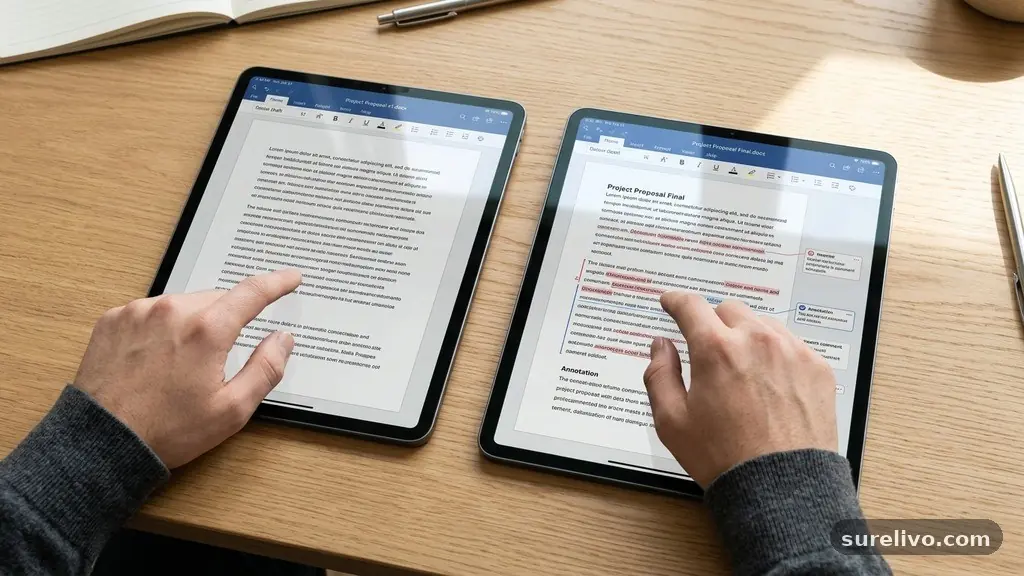
When Two Devices Show Different Versions of the Same File, the cause is usually practical rather than mysterious: one device may be offline, holding a cached file, or waiting to upload a newer local copy. The difference matters because an apparently small file version mismatch can lead to overwritten edits, outdated figures, or a missed deadline.
The good news is that you can usually identify the source by checking timestamps, sync status, file location, and version history in a sensible order. The steps below will help you compare both copies safely, resolve a sync conflict, and prevent the same confusion from returning.
1. Confirm That Both Devices Are Opening the Same File
Start with the simplest possibility: the files may look identical but live in different folders, accounts, or storage locations. One device could be opening a document from a cloud storage service while the other is opening a downloaded copy in Documents. The filenames may match perfectly, yet the contents can differ because they are separate files with separate histories.
Check the full file path on both devices. On a Windows computer, right-click the file and inspect its location or properties.
On macOS, select the file and use “Get Info.” On a phone or tablet, open the file details panel and look for its folder, account, or app location. A file inside OneDrive is not automatically the same working copy as a file inside a local Downloads folder, even if both are named “Budget.xlsx.”
Cloud services can also contain multiple folders with similar names. For example, a shared project folder, a personal folder, and an archived folder may each contain a document called “Project Plan.” Search results can hide this distinction by presenting the filename before the location. Open the details and compare the parent folder, owner, account, and sharing information.
- Compare the complete folder path on each device.
- Check whether both files belong to the same cloud account.
- Look for “Shared with me,” team, personal, archive, or download folders.
- Compare the file size as well as the visible filename.
Common mistake to avoid: don’t immediately overwrite one file with the other before confirming their locations. If the files are different copies, replacing one may destroy useful edits before you understand what happened. Make temporary duplicates first, adding labels such as “Laptop copy” and “Phone copy” to preserve the evidence.
2. Check the Internet Connection and Synchronization Status
Once you know both devices are accessing the intended location, check whether file synchronization has actually finished. A cloud app can display a document that was downloaded earlier while the newest changes remain on another device waiting to upload. The file appears current because it opens normally, but the service has not yet reconciled the copies.
Look at the sync icon beside the file or in the service’s menu bar. A spinning symbol often means that an upload or download is still in progress. A warning triangle may indicate a sign-in problem, insufficient storage, a blocked file, or a filename conflict.
A cloud icon can mean that the file exists online but is not fully stored locally. The exact symbols vary, so read the status text instead of guessing.
Open the service’s activity panel if one is available. It may say that a file is “syncing,” “up to date,” “paused,” or “unable to sync.” A device that has been in airplane mode, connected to a weak network, or restricted from background data may not have sent its edits yet. This is especially common after working on a laptop during travel or editing a document on a phone with mobile data disabled.
Services such as OneDrive, Google Drive, and Dropbox handle file synchronization differently at the interface level, but the useful questions are similar:
| What to check | Why it matters |
|---|---|
| Connection | The device needs reliable access to upload or download changes. |
| Sync status | A pending or paused status explains why copies do not match. |
| Account | Two devices signed into different accounts may show separate files. |
| Storage space | A full cloud account or disk can stop new versions from moving. |
Common mistake to avoid: don’t assume that seeing the cloud app installed means autosync is active. Autosync may be paused, limited to Wi-Fi, disabled for a folder, or affected by a sign-in token that expired. Allow the service time to complete, then close and reopen the file rather than relying on an already-open window.
3. Compare Modification Timestamps, File Size, and Metadata
After confirming the sync state, compare the technical details of both copies. The modification timestamp is often the fastest clue.
If the desktop copy was modified at 3:42 p.m. and the tablet copy shows 1:18 p.m., the tablet is probably older. If the times are identical but the content differs, investigate time-zone settings, software behavior, or a more complicated synchronization problem.
File metadata can reveal differences that are invisible in the document itself. Compare the file size, creator, owner, folder, extension, and last-access information where available.
A Word document saved as a newer format may have a different extension or size from an older copy. An image exported from an editing app may look the same but contain different embedded metadata or compression settings.
Timestamp comparisons need care. Some systems display local time, while a cloud service may record activity in Coordinated Universal Time.
A laptop set to the wrong time zone can also make a recent edit look older. The displayed timestamp may describe the local copy’s download time rather than the moment a colleague made the original change.
For text documents, use a comparison feature if the application provides one. Microsoft Word can compare documents, while many code editors and document tools can show line-by-line differences. For spreadsheets, check formulas as well as visible values.
A cell showing “100” may contain a typed number in one version and a formula such as “=SUM(B2:B8)” in another. Those files can appear equivalent until the source data changes.
- Record each copy’s modification time before editing further.
- Compare the file size and extension.
- Check the owner, creator, and storage location.
- Use a document comparison tool for important text or spreadsheet files.
- Inspect formulas, comments, tracked changes, and hidden sheets where relevant.
Common mistake to avoid: don’t treat the newest timestamp as unquestionable proof that a file contains the best version. A user may have opened and resaved an outdated copy, changing its timestamp without adding useful content. Metadata narrows the investigation; it doesn’t replace a content comparison.
4. Open Version History Before Editing or Replacing Anything
If the two copies still disagree, check version history in the cloud service or application. Version history records earlier states of a file and can show which account saved each revision. It gives you a safer way to identify the missing changes than repeatedly opening, saving, and replacing files.
In a browser, open the document’s details or activity panel and look for a history option. Microsoft 365 files stored in OneDrive, Google Workspace documents in Google Drive, and many Dropbox files can expose previous versions, although retention periods and available features depend on the account and file type. For official explanations of how Google Drive tracks earlier changes, consult Google’s Google Drive help on viewing and managing file versions.
Review the history from newest to oldest, but pay attention to the editor and device information. A revision saved by your colleague may contain their latest comments, while a later revision saved by you may be an older local copy that accidentally replaced those changes. The timeline can distinguish a true content update from a simple rename, move, or metadata change.
Before restoring anything, download or duplicate the current version. Give each copy a descriptive name, such as “Proposal before restore” or “Budget laptop edits.” If the history shows two valuable branches, neither should be treated as disposable. You may need to merge them manually, especially when both people edited different sections of a document.
When version history is missing
Version history may not exist for a file stored only on a local drive, a removable disk, or an app with limited revision support. Some services retain history only for a set period, and some formats are handled as whole-file replacements rather than editable revisions. In that case, search your computer’s recycle bin, backup software, email attachments, temporary folders, and previous exports.
Common mistake to avoid: don’t click “restore” simply because an older revision has the correct paragraph or figure. Restoration usually replaces the current cloud version, which could remove unrelated work. Download the candidate revision or create a copy first, then compare and merge intentionally.
5. Investigate Offline Access and Cached Files
Offline access is useful, but it is one of the most common reasons two devices display different content. A phone, tablet, or laptop may have permission to edit a file without an active connection.
The application saves those changes to a local cache or offline workspace, then waits until it can reconnect. Meanwhile, another device may open the online version and show different text.
A cached file is a locally stored representation used to make opening faster or to support offline work. It can be perfectly legitimate and still be older than the cloud copy.
Some apps display an offline badge, while others show a small “available offline” message in file details. If the app was closed abruptly, the pending edits may not be obvious until the next connection.
Reconnect the device to a reliable network and leave the relevant app open for a few minutes. Check whether it asks you to upload offline changes or choose between local and online versions.
Don’t edit the file again during this stage; additional changes can make the conflict harder to interpret. If the device offers a choice, preserve both copies before selecting one.
Offline files can also remain after a user signs out or changes accounts. A document might appear under a familiar filename but be tied to the previous account’s cached data.
Clear caches only after confirming that important offline edits have been uploaded or copied elsewhere. Cache clearing can remove unsent work.
Common mistake to avoid: don’t delete the app, clear its storage, or sign out as a first response. Those actions may remove an offline copy that contains the only record of recent edits. Capture screenshots, export the file, or copy it to a separate folder before troubleshooting the cache.
6. Resolve a Sync Conflict Without Losing Either Set of Edits
A sync conflict occurs when two devices change the same file before the service can combine those changes. One device may have edited a report on a flight, while a colleague changed the online copy at work. When both versions reach the service, the system may keep one as the main file and create a conflicted copy, or it may ask someone to choose what to retain.
Begin by preserving every available version. Download the online copy, the local copy, and any conflict copy with a different name.
Record which device produced each file and the approximate editing time. This simple inventory prevents the common error of treating the version currently shown in the app as the only surviving version.
Next, compare the changes by type. If two people edited separate paragraphs, manual merging may be easy. If both changed the same sentence, spreadsheet cell, presentation slide, or image layer, decide which edit reflects the intended result.
For a financial workbook, inspect formulas and linked sheets. For a contract, review tracked changes and comments rather than copying visible text alone.
A safe conflict-resolution sequence
- Pause editing and preserve all copies.
- Identify the owner and creation or modification times.
- Compare content, comments, formulas, and attachments.
- Create a new merged working file rather than editing an original in place.
- Save the merged result and confirm that it synchronizes successfully.
- Tell other collaborators which version is now authoritative.
Some services create filenames containing a device name, “conflicted copy,” or a user’s email address. Don’t dismiss these as junk.
They may contain the exact edits that disappeared from the main document. Once the merged file is verified, archive the old copies for an appropriate period rather than deleting them immediately.
Common mistake to avoid: don’t resolve a conflict by choosing “keep online” or “keep local” without reading what each option means. Those buttons can discard a meaningful branch in seconds. A new merged file is safer when the changes cannot be reconstructed easily.
7. Check Application, Format, and Permission Differences
Sometimes the storage system is working correctly, but the two applications interpret or display the file differently. A document opened in Microsoft Word may show tracked changes, fields, or comments that a mobile viewer hides.
A spreadsheet opened in a preview window may display calculated values but not the formulas behind them. A presentation can look different because fonts, embedded media, or unsupported transitions are missing on one device.
Check whether both devices use the same application and a compatible version. Older software may not support newer formatting features.
A file saved in a modern format could be converted when opened in an older program, changing layout or removing features. Some apps also create a PDF preview that is not the editable source file, which can make the displayed content appear frozen.
Permissions matter too. A user with view-only access may be opening a shared file while another user edits a private copy.
If a file is marked read-only, the app may save changes as a new local document instead of updating the original. Review sharing settings, ownership, and whether the account has edit permission.
| Symptom | Possible cause | Useful check |
|---|---|---|
| Text layout changes | Missing fonts or different app versions | Open the file in its original application. |
| Values differ from formulas | Preview mode or calculation settings | Inspect formulas and recalculate the workbook. |
| Edits save as a new file | Read-only permission or protected folder | Check access rights and file properties. |
| Images or media disappear | Unsupported format or incomplete download | Wait for download completion and inspect attachments. |
Common mistake to avoid: don’t judge a file solely by its appearance in a preview pane. Previewers often omit comments, formulas, hidden content, and interactive elements. Open the source file in the intended editing application before deciding that the file itself has changed.
8. Prevent Future File Version Mismatches
Once you know why the devices differed, reduce the chance of a repeat. Choose one authoritative storage location for active work, and use a consistent account across devices.
If a team uses Google Drive, OneDrive, or Dropbox, agree on the shared folder instead of passing downloaded attachments back and forth. A clear home for the file removes many ambiguous copies.
Wait for synchronization to finish before shutting down a device or switching to another one. If you work offline, make that status visible in your own routine: add “offline” to the filename only when necessary, or keep a short note identifying the edits made locally. Reconnect before opening the same document on another device, then confirm that the upload completed.
Good naming helps when multiple related copies are unavoidable. Use meaningful labels such as “Client brief—2025-03-08—review” rather than “final,” “final2,” and “final newest.” Dates should follow one consistent format, and major milestones can be marked with words such as “approved” or “draft.” Avoid renaming files while a sync operation is active, since some services may briefly treat the renamed item as a new file.
For important work, use version history and a backup strategy together. Cloud history helps recover recent revisions, while an independent backup protects against accidental deletion, account problems, or a synchronization error. Test recovery occasionally; a backup that cannot be opened or restored is not much protection.
- Keep active files in one agreed shared location.
- Use the same account and application where possible.
- Confirm sync completion before changing devices.
- Preserve offline edits before clearing caches.
- Use descriptive filenames and avoid chains of “final” copies.
- Keep an independent backup for irreplaceable work.
Common mistake to avoid: don’t rely on autosync as a substitute for collaboration habits. Synchronization moves files; it does not decide which business decision, sentence, formula, or design change should win. For shared work, communicate when a document is being edited and identify the approved version clearly.
Frequently Asked Questions
Why do two devices show different versions of the same file when both are online?
Being online doesn’t guarantee that synchronization has finished. One device may have paused syncing, use a different account, open a cached copy, or display a preview that has not refreshed. Check the file path, account, sync activity, modification timestamp, and browser version of the document before making edits.
Can opening a file create a new version?
Usually, opening alone shouldn’t create a meaningful content version, but some applications update metadata, refresh linked data, or save automatically. Autosync can then upload that change. An outdated copy that is opened and automatically saved may receive a newer timestamp without containing the newest information from another device.
Is it safe to delete a conflicted copy after choosing the online version?
Wait until you have checked its contents and confirmed that no important edits are missing. A conflicted copy may contain the only version of a paragraph, formula, comment, or attachment created offline. Preserve it temporarily, compare it with the selected version, and delete it only after the merged result is verified and backed up.
Why does the file look different on a phone but not on a computer?
Mobile apps often use simplified viewers, substitute fonts, hide tracked changes, or display cached data. They may also calculate spreadsheets differently or omit unsupported media. Open the file in the full application, confirm that it has downloaded completely, and compare the underlying file details rather than relying only on the mobile preview.
What should I do if the newest edits have disappeared?
Stop editing, preserve every local and cloud copy, and inspect version history before restoring anything. Check offline folders, conflict copies, recycle bins, email attachments, and backup locations. If the document is important, create a separate merged file and keep the originals until all missing changes have been recovered.
Getting Both Devices Back in Agreement
When Two Devices Show Different Versions of the Same File, start with identity and location, then check synchronization, timestamps, metadata, offline access, and version history. Preserve copies before restoring or replacing anything, because the apparently older file may contain the one edit you need.
After the versions are reconciled, choose one shared source, wait for sync completion, and use clear filenames and backups. If the problem keeps returning, review accounts, permissions, application versions, and offline settings. A careful comparison now can turn a confusing file version mismatch into a manageable routine—and protect your next round of work from the same surprise.